Transforming Power, Politics and Governance
From division and fear towards
direction, trust and care.
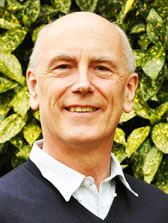
What would become possible if we changed our perspective?
I have spent much of my life looking at systems that are no longer working as they were intended to work. My career has taken me through:
- Engineering
- Architecture
- Property development
- Risk assessment
- Psychology
- Conflict transformation
- International diplomacy
- Global governance
They may appear to be very different worlds. To me, they are connected by one theme:
understanding how things work
and how they can work better.
Today, I work with leaders, organisations and institutions exploring how we can transform the systems through which we make decisions, resolve conflict and exercise power.
Not simply by changing the people at the top. By changing the thinking that shapes the system itself.
From Mechanic to Creator
There are two sides to my work.
The Mechanic
I look beneath a problem to understand what is actually causing it.
Where is the system failing? What risk has been overlooked? What assumption no longer holds true?
The Creator
Once we understand why the old system is failing, what could transform it?
What new structure, relationship or perspective would allow something better to emerge?
First understand the system.
Then discover what wants to transform it.
That combination has followed me from repairing early computers and restoring old buildings to assessing aviation risk, resolving conflict and exploring the transformation of global governance.
Helping Leaders See the System Differently
I work as a coach, adviser and systems thinker. My role is rarely to tell people what decision they should make. It is to help them see the situation from a wider perspective — particularly when familiar approaches have reached their limits.
Leadership and Decision-Making
Helping leaders, boards and institutions step outside the pressure of the immediate problem and see the larger system it sits in.
Good decisions need both conscience — does this reduce harm and increase care? — and competence — will it work, given the evidence, risks and wider system?
Conflict Transformation
Conflict is rarely transformed by defeating the other side. Behind positions lie fears, needs, identities and assumptions.
The question changes from “How do we win?” to “What resolution becomes possible when we understand what both sides actually need?” The movement from power over towards power with.
Governance Transformation
Many of the institutions governing our world were designed for another era. The challenge is not simply to reform them, but to rediscover the purpose they were created to serve.
At the global level, that means returning to the opening words of the UN Charter: “We the Peoples…”
Humanity is the superpower that
governments must remember they serve.
A Life of Looking Beneath the Surface
Each chapter taught me another part of the same lesson.
-
Early life
Born into the aftermath of war
I was born a British citizen in Germany shortly after the Second World War, to a British father and a German mother, into the devastation of Hamburg and Berlin, so brought up with family stories of the pain of war. Later, the Cuban Missile Crisis showed that humanity had acquired the power to destroy not just cities, but much of civilisation itself. In the 1960s, the terror of nuclear weapons was palpable.
In the late 1960s I flew to New York with an invitation to meet the then UN Secretary-General, hoping to support the control of nuclear weapons through the emerging Non-Proliferation Treaty — and drove down Route 66, following the music of the time.
How do we prevent systems of power from producing catastrophic outcomes?
-
Engineering
Thinking in systems
I studied electronics and became fascinated by the invisible structures that make visible things happen. I repaired early computers, when memory still meant physical components wired together by hand. It taught me to think in systems.
When something fails, the visible fault is not always the real cause.
-
Transforming buildings and property
Diagnose, envision, agree, transform
I moved into architecture and surveying, became a Chartered Surveyor, measured and restored old London houses, and eventually became a property developer. A building teaches a systems lesson: you diagnose the failure, draw up a new vision of possibility, develop a specification, obtain agreement and organise the work. I increasingly see governance in much the same way.
You cannot repair a leaking roof by arguing with the rain.
-
Healing people and conflict
“Is this all there is to life?”
Traditionally successful from property development before the age of forty, I turned my attention from buildings to people. I explored psychology, personal development, religion, bodywork and the deeper dynamics behind human behaviour and conflict. I came to see that beneath many external conflicts lies an internal one.
Fear, projection, identity — and the division between us and them.
-
Societal Risk
The societal risk nobody owned
Living close to Heathrow, I became involved in aviation and development issues and produced an assessment of aircraft crash risk affecting London for the Heathrow Terminal 5 public inquiry. Different organisations each fulfilled their own responsibilities while a major societal risk fell between them, because nobody was responsible for the whole system.
Who is responsible for the risk to humanity as a whole?
-
Global governance
“We the Peoples” at the United Nations
In 2004, after 9/11 and the invasion of Iraq, at an intergovernmental conference on nuclear weapons, I realised the world could not rely on governments alone to solve catastrophic risks like nuclear weapons. There was no parliamentary representation of “We the Peoples” at the UN, so I became a co-founder of the Campaign for a United Nations Parliamentary Assembly, launched around the world in 2007 (UNPAcampaign.org).
That work brought me into the room for the 2017 adoption of the Treaty on the Prohibition of Nuclear Weapons, for which the International Campaign to Abolish Nuclear Weapons won the Nobel Peace Prize, and for the start of the annual UN process on a Middle East Weapons of Mass Destruction Free Zone in 2019, with a draft outcome treaty produced by the group I was working with.
What transformation of perspective would make better institutions possible?
Three Levels of Democracy
I increasingly see healthy democratic governance as three complementary levels — Peoples, Parliamentarians, Governments — followed by something equally important: checking whether it worked.
One purpose above them all: Humanity.
-
We the Peoples
Voice
People express their experience, concerns, needs and aspirations.
-
We the Parliamentarians
Direction
Parliament listens to those differences and transforms them into coherent democratic direction. Where difference becomes direction.
-
We the Governments
Delivery
Government turns democratic direction into competent administration and practical results.
-
Did it work?
Verification
Did it produce the intended outcome? What unintended harm occurred?
-
What needs fixing?
Correction
What needs correcting? What is learned flows back into the next round of voice.
↺ A continuous cycle: Voice → Direction → Delivery → Verification → Correction
Three Ideas I Keep Returning To
Trust is an outcome, not a prerequisite
In serious conflicts people often do not trust each other, and waiting for trust becomes an excuse for doing nothing.
A better starting point is verification. Do something together that neither side has to take on trust. Verify the result together. Repeat. Confidence grows, and cooperation becomes easier.
Verify together to build cooperative trust.
From power over to power with
Power itself is not the problem. The question is how it is exercised. Power over asks, “How do I make you do what I want?” Power with asks, “What becomes possible when our capabilities work together?”
No country can independently solve a global problem. No ideology possesses all wisdom. No institution sees the whole picture.
Our greatest untapped resource may be our ability to combine what we know.
Some risks can only be managed together
Tribes became kingdoms, kingdoms became states, states became military blocs — and the weapons built to protect them can now threaten humanity as a whole. The security of the part can no longer be separated from the security of the whole.
Climate, pandemics, artificial intelligence and nuclear weapons do not stop at borders.
Our institutions must learn to think at the scale of the consequences they create.
Three Initiatives
These ideas now take shape in three connected initiatives.
Turn to Humanity
Humanity is not at the
bottom of the system.
Humanity is its purpose.
Humanity is the real superpower.
A people-powered shift from fear to care, separation to connection, and helplessness to human agency.
TurnToHumanity.org →The Global Duty of Care
Preventing public harm before catastrophe occurs.
Aviation does not wait for collisions: risks are assessed, standards set through the International Civil Aviation Organization (a UN specialised agency), incidents reported and safety verified continuously. This asks how the same principle could apply to the greatest risks governments create.
GlobalDutyOfCare.com →Productive Politics
From division to direction through discovery.
What if political difference were treated not as opposition, but as information? The Productive Politics Podcast explores this with people experienced in leadership, government, diplomacy and conflict transformation.
PodcastWhere the Ideas Are Written Down
The thinking behind Turn to Humanity, the Global Duty of Care and Productive Politics runs through my writing. If you would rather listen than read, start with the talk.
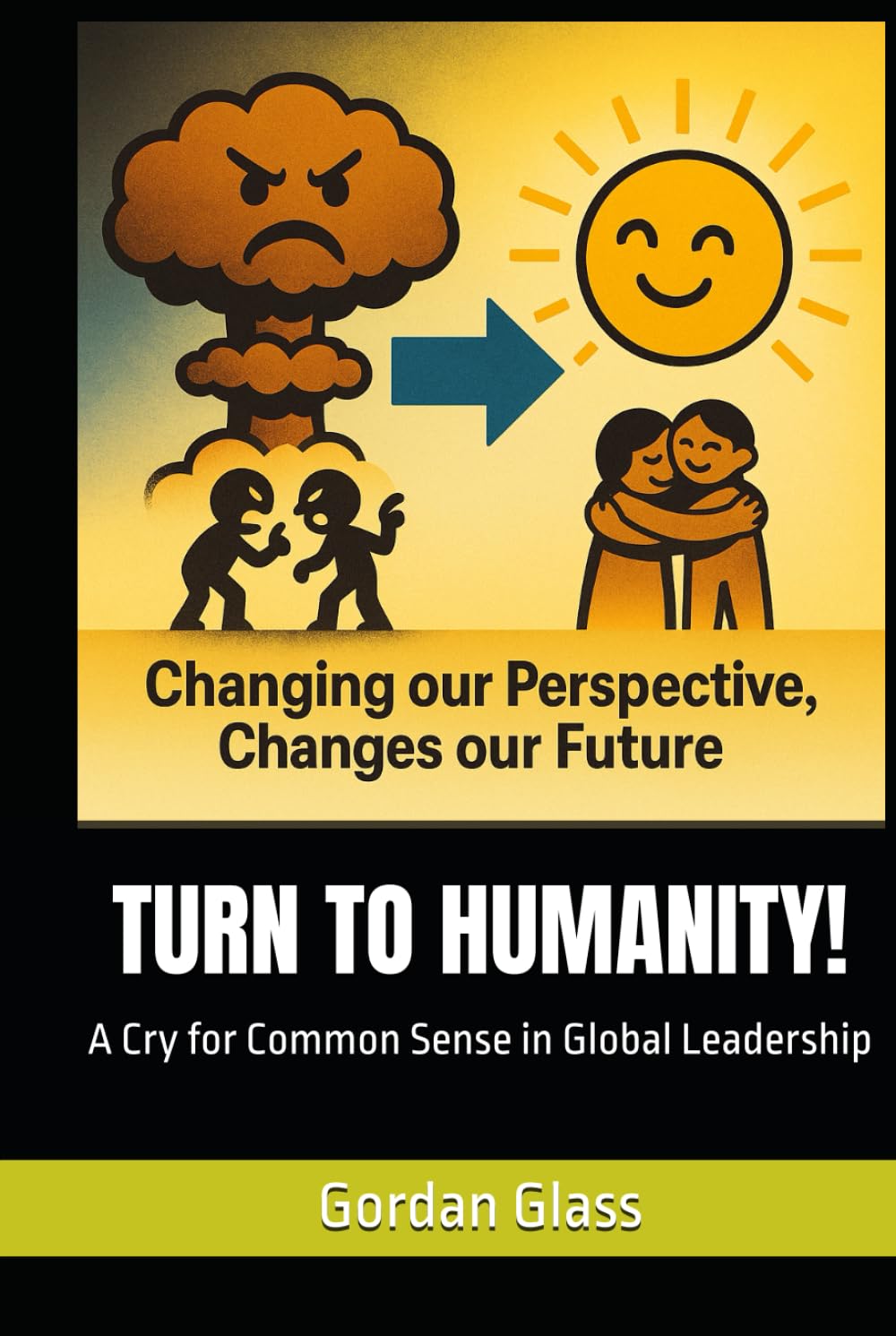
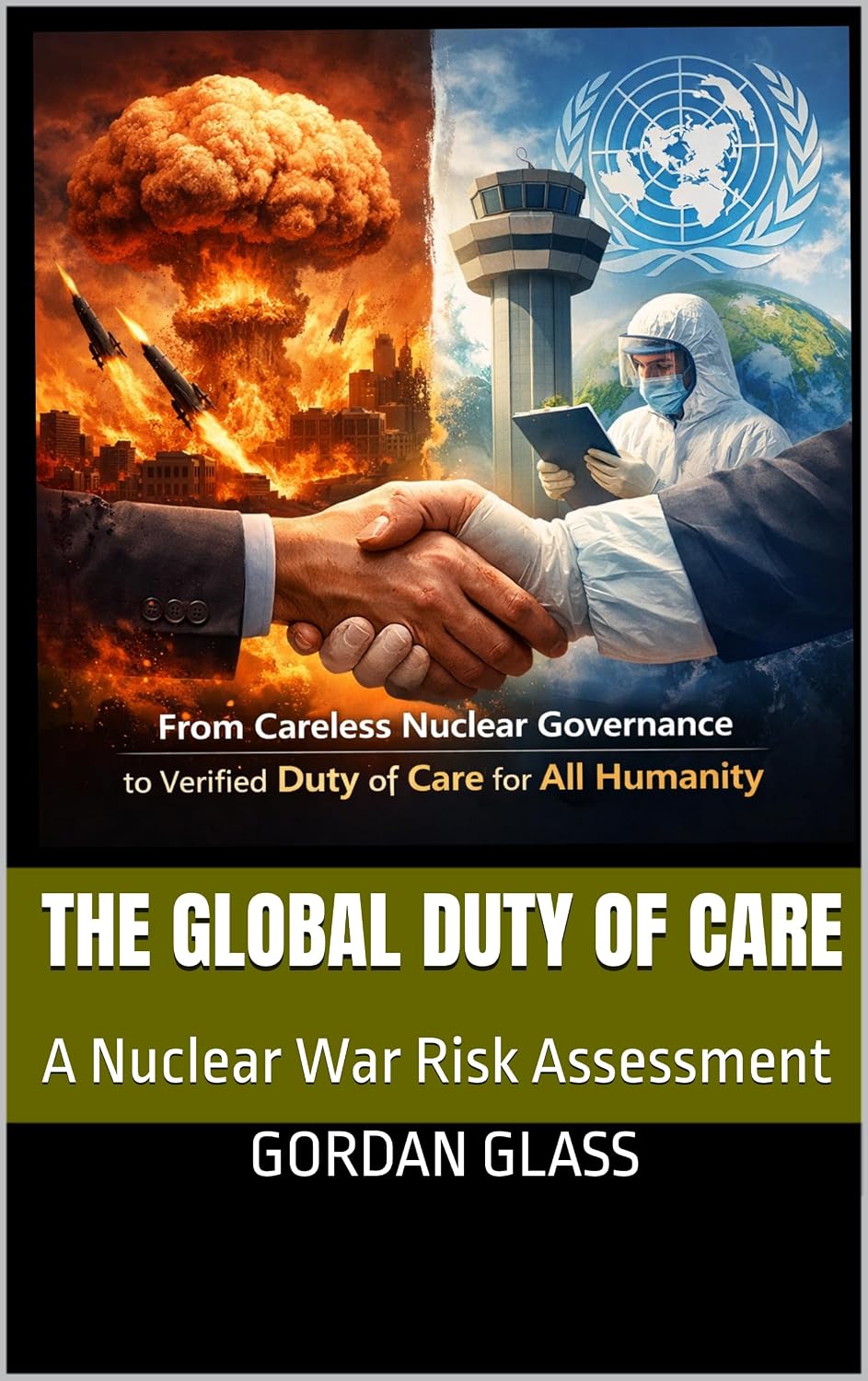
My Turn to Humanity trilogy and other writing. The full list is on my Amazon author page.
Author page on AmazonThe Hole in the Roof of Our WorldGordan Glass, from Wisdom Events. Watch on YouTube →
Ideas That Change the Picture
My aim is not to tell audiences what to think.
It is to offer another place from which to look.
Speaking
Talks on moments when a change in perspective reveals possibilities that were previously hidden.
- Turn to HumanityA shift in perspective that turns our picture of global power upside down.
- The Global Duty of CareWhat aviation safety can teach us about preventing catastrophic public harm.
- Productive PoliticsHow politics can move from adversarial division towards democratic direction.
- Beyond the Atom: Reality Hidden in Plain SightSeparation, projection, and the possibility that our deepest conflicts arise from seeing ourselves as more separate than we really are.
Writing
Practical systems thinking, psychology, conflict transformation and global governance.
- Turn to HumanityThe trilogy behind the movement: the deeper perspective shift from separation towards shared humanity.
- Transforming Global GovernanceMechanisms through which humanity can make global governance more representative, responsible and capable.
- PATH to PeaceHow institutions might prevent nuclear catastrophe before crisis turns into conflict.
- The Global Duty of CareA framework for applying risk assessment, responsibility and verification to threats capable of widespread public harm.
For Leaders, Boards and Organisations
Facing Difficult Questions
I am particularly interested in conversations where:
- a familiar strategy is no longer working
- a conflict appears stuck
- a system is producing consequences nobody intended
- the risks are larger than any one organisation’s remit
- a leadership team needs a wider perspective
- an apparently impossible problem needs a different frame, rather than another argument
Ways we can work together
- Private advisory conversations
- Leadership coaching
- Board discussions
- Strategic workshops
- Speaking
- Collaborative exploration
My key experience is in transformation. My best contribution is earlier in the process: seeing the pattern, asking the question others may not yet be asking, developing the architecture, and helping leaders turn a possibility into a practical direction. Like my work with buildings, I may help recognise the roof is failing, diagnose why, and draw the plans for something better — while others may be far better placed to build it.
The starting point is usually not “What is the answer?” It is: “Are we looking at the problem from the right place?”
Get in touchThe Main Harvest May Still Be Ahead
Engineering. Buildings. Development. Psychology. Risk. Conflict. Politics. International institutions. Each taught me another part of the same lesson: how do we understand a system deeply enough to help it transform?
Not because I believe I possess the answers. But because humanity urgently needs better questions.
- What are we actually trying to achieve?
- What assumptions are keeping the problem in place?
- What risk are we failing to see?
- What does the other side really need?
- How could we verify rather than merely trust?
- What would power with look like here?
What would we do differently if we remembered that, beneath all our nations, parties, religions and identities, we are one humanity?
Changing our perspective changes our future.
And sometimes one good conversation is enough to begin.
Gordan Glass® is the trademarked author name of Gordon Glass
The Mission
Gordan Glass works with leaders, organisations and institutions to transform power, politics and governance — from division and fear towards direction, trust and care.
See also & Legal
Follow the work: [Turn to Humanity, Global Duty of Care, Productive Politics]
My companies: [Global Leadership Ltd., Government-Dynamics]
© 2026 Global Leadership Ltd.